April 2026

Adaptation as an Asset Class: Structuring Water,...

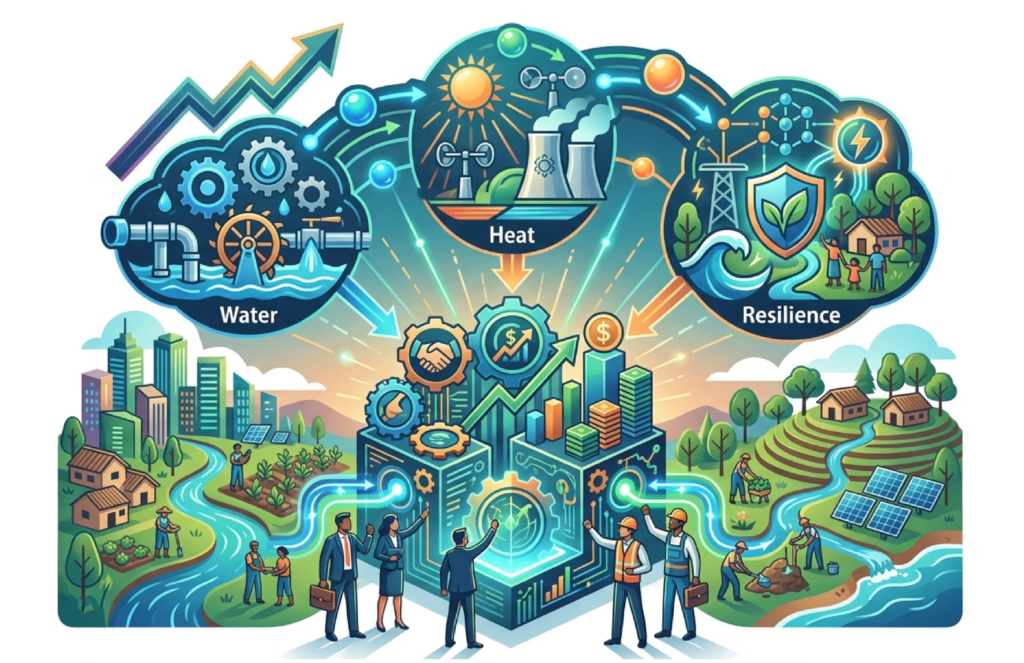
Adaptation is still financed as a policy obligation. It needs to be financed as an investment category. That is the core shift emerging markets now need to make. The capital case is increasingly clear, but the market architecture is not. UNEP’s 2025 Adaptation Gap Report puts developing-country adaptation needs at US$310 billion to US$365 billion a year by 2035, while international public adaptation finance flows to developing countries were only US$26 billion in 2023. IFC makes the market failure even starker: adaptation and resilience is a trillion-dollar market opportunity, yet 98% of tracked adaptation finance is still dominated by public actors.

Adaptation as an Asset Class: Structuring Water,... Read More »
the transition plan premium

The Transition Plan Premium: What Investors Now...

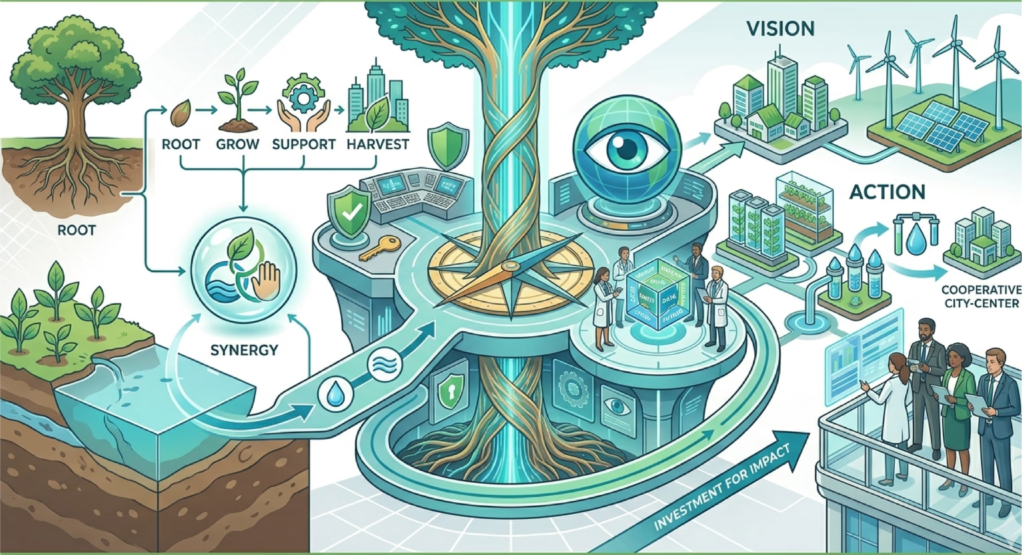
Net zero pledges are no longer scarce. Credible transition plans are. That gap is creating a premium in capital markets. Now, investors are not rewarding ambition alone. They are rewarding companies that can show how ambition will be financed, governed, sequenced, and delivered. The real shift is from target-setting to implementation proof. A decade ago, a 2050 net zero statement could signal leadership. Today, it often signals very little unless it is backed by quantified near-term actions, capital allocation, operating assumptions, and evidence that the business model can transition without destroying value. 

The Transition Plan Premium: What Investors Now... Read More »

Can Islamic Finance Lead on Transition Integrity?

Islamic finance has a credible shot at leading on transition integrity, but only if it moves from ethical intent to verifiable transition discipline. That is the real test now. The market no longer lacks principles. It lacks financing models that can prove capital is aligned with a credible low-carbon transition without drifting into greenwashing. On paper, Islamic finance starts from a position of strength: it is built around asset-backing, risk sharing, and the avoidance of excessive speculation and harmful activity. Those foundations map naturally to the kind of real-economy financing the transition requires. But principles alone will not win leadership. Leadership will come from showing that Shariah-based finance can finance transition with more credibility, clearer use of proceeds, tighter governance, and stronger accountability than conventional markets often do.

Can Islamic Finance Lead on Transition Integrity? Read More »

Why IFRS S2 Data Architecture Is Becoming...

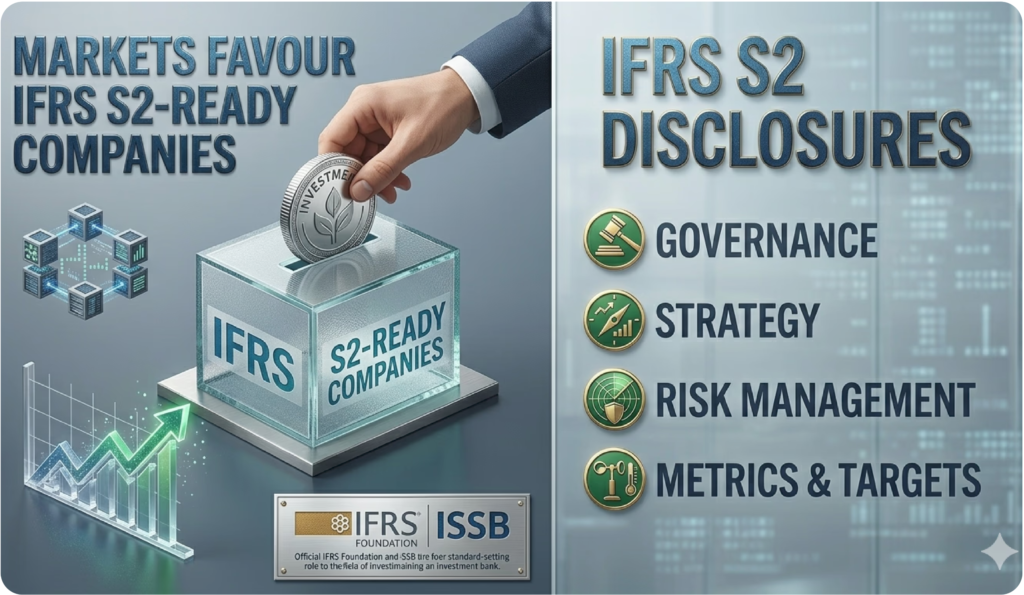
For most companies, the first wave of climate disclosure was about publication. The next wave is about infrastructure. In 2026 and 2027, the real competitive edge will not come from producing a polished sustainability report at the end of the cycle. It will come from having an IFRS S2-ready data architecture that can generate decision-useful, comparable, and assurance-ready climate information on demand. That shift matters because capital markets are moving from curiosity to calibration. They increasingly want climate data they can price, compare, test, and connect to financial prospects. IFRS S2 was built for exactly that purpose: to provide information about climate-related risks and opportunities that is useful to users of general purpose financial reports in making decisions about providing resources to the entity.

Why IFRS S2 Data Architecture Is Becoming... Read More »

Digital Twins for Sustainable Infrastructure: How to...

The infrastructure problem is no longer just a capital problem. It is a preparation problem. The World Bank says developing countries need infrastructure investment equivalent to about 4.5% of GDP each year, and its own guidance emphasizes that attracting private capital depends on creating bankable project pipelines. At the same time, recent G20-linked work on infrastructure preparation notes that global infrastructure investment needs could reach US$18.5 trillion by 2040, with emerging markets and developing economies accounting for roughly 70% of the shortfall, while private infrastructure investment in those economies has remained stagnant over the past decade. Climate Policy Initiative has made the same point from the finance side: private investors still face policy, currency, off-taker, liquidity, and technology risks, as well as a lack of project pipelines.

Digital Twins for Sustainable Infrastructure: How to... Read More »

Scroll to Top